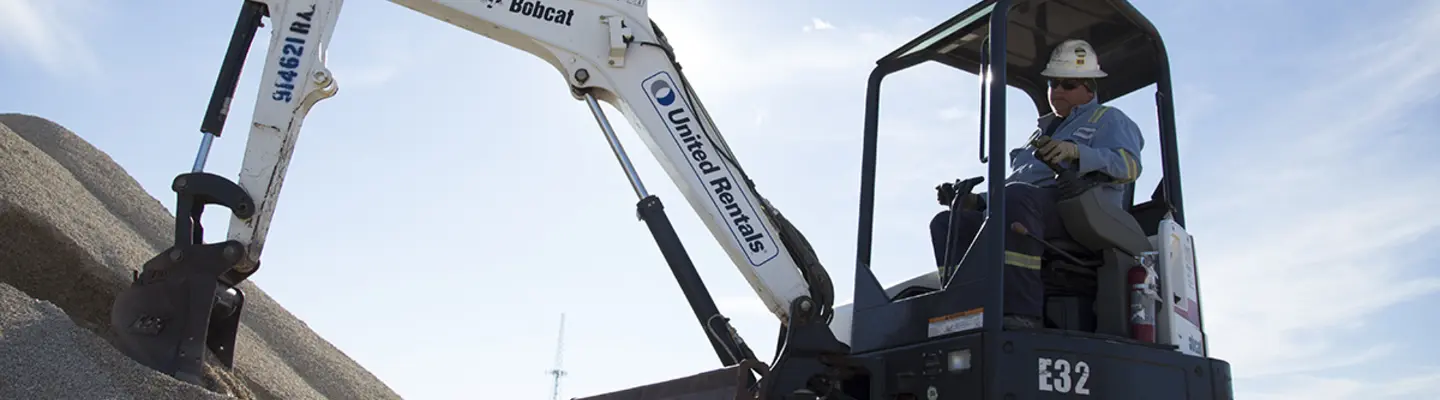
man in mini excavator near dirt pile

What is a Mini Excavator Used For? Sizes, Applications and Attachments Explained

From backyard pools to utility trenching, mini excavators bring big-machine capability to jobsites where space is tight.

Article Updated on: July 24, 2026

Excavators, which can weigh up to 84,000 pounds, are the behemoths of construction sites and deliver maximum digging power. But their smaller siblings, mini excavators, make up for what they lack in size with versatility.

Mini excavators, also known as compact excavators, small excavators or trackhoes, weigh 2,300 to 18,600 pounds and pair with attachments like augers, blades and hydraulic breakers for small or medium landscaping, digging, trenching and drilling projects.


When should you use a mini excavator?

A mini excavator is the best choice when you need powerful digging performance on a jobsite where larger equipment won't fit.

Choose a mini excavator if your project involves:

  • Digging trenches, foundations or utility lines
  • Working in tight spaces such as backyards or between buildings
  • Landscaping projects like pools, hot tubs or tree installation
  • Small demolition projects
  • Soft or muddy terrain where tracked equipment performs better
  • Using specialized attachments such as augers, breakers or grading blades


Why choose a mini excavator?

Thanks to their versatility and advanced hydraulics, mini excavators are often used in place of larger construction equipment. They weigh less than full-size excavators and exert less ground pressure. Their compact size allows them to maneuver in places full-size excavators, backhoes and even skid steer loaders have trouble accessing, making them ideal for small, narrow or congested jobsites.

Key benefits of mini excavators include:

  • Small and compact, yet powerful
  • Compact swing radius for tight workspaces
  • Reliable performance on a variety of terrains

Because mini excavators feature a single arm and a compact boom swing, they can work in tighter spaces than a backhoe. Reduced tail swing models are ideal for work in between buildings, and retractable undercarriage configurations add maneuverability. A mini excavator’s larger capacity compared to a skid steer allows it to handle digging, demolition and trenching work a skid steer can’t.

Mini excavators can feature tracks or wheels. Models with rubber tracks can handle wet and muddy terrain better than wheeled skid steers. The smallest mini excavators have 40-inch track widths that allow access to almost any space. Towing is easy with a regular hitch, trailer and ¾-ton pickup for most mini excavator models.

What is a mini excavator used for?

Mini excavators are used for digging, trenching, backfilling, leveling, grading and even drilling.

Mini excavator can help you accomplish may projects, including:

  • Installing pools and hot tubs: Mini excavators are the perfect solution for digging out in-ground pools or hot tubs, even in the smallest of backyards. Maneuverability, power and precision make this machine a go-to for residential landscaping work.
  • Repairing sewer lines: Mini excavators allow operators to efficiently move dirt when repairing sewer lines while fitting in tight spots near structures. A dozer blade attachment can level the yard once the repair is complete.
  • Tree installation and removal: A mini excavator digs holes for tree transplants and backfills over the root ball. With the right attachment, it can remove even larger trees, and a thumb grapple attachment can remove stumps.
  • Demolishing small structures: Barns, sheds, or other structures can all be taken down using a mini excavator, which can also load debris for disposal. 
  • Drilling for posts, drainage or landscaping: Using an auger attachment, mini excavators can easily drill deep into soil or concrete for installing fence posts, signage or tree planting.

What size mini excavator do you need for your project?

Weight Class

Typical
Dig Depth

Best-Fit Applications

2,000–3,999 lbs

5 to 7 feet

Residential landscaping, small pool/hot tub digs, tight backyard access

4,000–9,999 lbs

7 to 11 feet

Sewer line repair, tree removal, mid-size trenching

10,000-19,000 lbs

11 to 15 feet

Utility trenching, demolition, footing and pool excavation requiring more power

What attachments and configurations are available for mini excavators?

A wide range of attachments extend the versatility of mini excavators, from blades and buckets to augers, compaction plates, hydraulic breakers and more. Cab-mounted controls allow operators to switch between attachments efficiently.

Blades can be straight or angled. Straight blades add stability on uneven surfaces. Angled blades allow operators to configure the blade for the best working position, and left and right blade adjustments speed up backfilling and grading.

Different arm configurations change the capabilities of mini excavators. The standard arm delivers maximum breakout force and lifting capability. Long arms have higher dump heights and can reach farther, allowing operators to work without repositioning the machine. They’re often used for digging foundation footings and utility trenches. Extendable arms increase dig depth.

When should your team use a mini excavator rental?

A mini excavator rental makes sense when your project needs excavator-level power without an excavator-level footprint.

Consider a rental when:

  • Your worksite has narrow access points, tight side yards or space between structures
  • Ground conditions are soft, wet or uneven and a wheeled machine won't hold up
  • You need attachment versatility rather than a single-purpose machine
  • The project is short-term and doesn't justify a purchase
  • Your teams need to move between multiple small jobsites without heavy transport requirements

United Rentals offers mini excavators either for sale or for rent, so your team can choose the option that fits the scope and duration of the work.

Frequently Asked Questions

What is a mini excavator used for?

Mini excavators are used for digging, trenching, backfilling, grading and drilling on jobsites where space or ground conditions limit larger equipment. They're commonly used for pool digs, sewer line repair, tree work and small demolition.

What size mini excavator do I need for my project?

The size mini excavator you need depends on the dig depth and jobsite access. A 2,000 to 3,999-pound machine digs up to 7 feet deep and suits residential work, while 4,000 to 9,999-pound models reach up to 11 feet for mid-size trenching and utility jobs. Large 10,000 to 19,000-pound machines can dig up to 15 feet for utility trenching and pool excavation.

Is a mini excavator better than a skid steer for digging?

Yes, a mini excavator is better than a skid steer for digging, demolition and trenching work. A mini excavator's larger capacity and dedicated digging arm outperform a skid steer, which is better suited for surface-level tasks.

Can a mini excavator work in wet or muddy conditions?

Yes, mini excavators can work in wet or muddy conditions. Tracked mini excavator models handle wet and muddy terrain more effectively than wheeled skid steers, making them a reliable option for challenging ground conditions.

Visit our online marketplace to browse our selection of mini excavators.

Current Theme: mobile
Profile: N/A
Account: []